The lazy logic of ‘Impossible’
Debunking the myth of political infeasibility
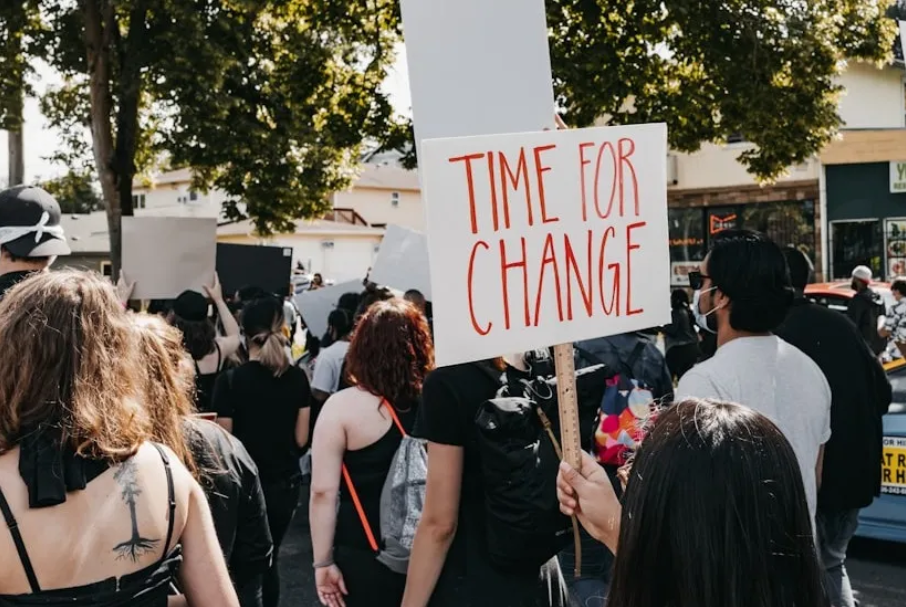
Photo by Duncan Shaffer on Unsplash
A kind of self‑policing consensus exists within certain sections of the climate community: that some ideas, like broadly expanding the use of carbon pricing, are simply “off the table.” Not because they’re technically unworkable or ethically indefensible, but because the received wisdom says they’re politically impossible.
Yet history shows that the politically impossible is rarely a fact; it’s only impossible until someone comes along and proves that it isn’t.
Calling a policy “politically impossible” is seldom useful but is often lazy. At the very least it begs the question: how do political conditions change? The reality is that political feasibility is not constant. It is determined by messaging, organisation, engagement, and – quite often – timing. Rather than being a static constraint, feasibility is a dynamic variable shaped by economic events or shocks, cultural narratives, elite cues, interest group pressure, media attention and ultimately public opinion. Many policies now considered mainstream were once dismissed as unrealistic, radical, or career‑ending. Slavery, votes for women, and same-sex marriage come quickly to mind.
Compelling examples can be found in the environmental arena, too. In the early 2000s, high levels of renewable energy usage were widely dismissed as being politically unrealistic due to cost, intermittency, and grid constraints. Yet today, countries routinely set 50-100% clean‑power targets, and solar/wind are the cheapest forms of new power generation in many markets.
Communications played an important role in this shift. Consistent, long-term activism from voices ranging from Al Gore to Greta Thunberg was critical in moving the needle of public opinion. Smart policy makers reframed renewables from “expensive idealism” to “economic opportunity.” Over time, corporate commitments and city‑level pledges helped normalise ambition. And, at a time when many of those corporate evangelists have gone silent, economic shocks from Ukraine to the Gulf have made the benefits of renewables to energy security abundantly clear.
Congestion pricing is another example. Before it was implemented, the major urban centres of London, Stockholm and New York congestion pricing was faced overwhelming public opposition and was derided as political suicide. But once it was implemented, support surged as its benefits became apparent: less traffic, cleaner air, more transit funding. Communications was again critical, particularly clear messaging about how revenues would be used, and framing the policy as a way for drivers to pay their fair share for the roads they use. Proponents of the policy were eventually able to use such successes to build support for road pricing in other cities.
From impossible to inevitable
Communications alone didn’t make these changes happen, of course. In many cases, external factors have created the critical impetus for shifts in public opinion. Yet the impact of effective communication can’t be underestimated. So, what are the mechanics of moving an idea from impossible to inevitable? Here are five starting points:
Reframe the narrative. Policies can become feasible when their story changes. Reframing can be as simple as shifting a proposal from a “costly burden” to “an economic opportunity,” or from a “radical overhaul” to a “common-sense update.” A change in frame can also come from the voices who support a policy. By engaging a broad range of supporters, a “niche activist issue” can be reframed as being in the mainstream public’s interest.
Sell like a marketer. Borrow from the tools of consumer marketing, using audience segmentation, emotional resonance and repetition. Use simple, sticky concepts and slogans (e.g., “polluter pays,” “clean air for kids”) and deploy trusted messengers — doctors, business leaders, local officials, community figures and celebrities — to create a chorus of support.
Build coalitions. Feasibility increases when alliances form, and coalitions signal legitimacy and reduce perceived political risk. From a communications perspective, the stranger the bedfellows, the more persuasive they are: think farmers teaming up with environmentalists, or tech companies with community groups.
Pilot and demonstrate effects. Small‑scale pilot projects provide evidence that shifts public expectations. Moreover, as with urban congestion pricing, success in one jurisdiction can help persuade others.
Get time on your side. It’s notoriously hard to predict the future, but you can prepare for its uncertainty. Economic, environmental or geopolitical crises can rapidly shift what’s considered possible. In the same way that organisations prepare themselves for a range of events, policy advocates should plan proposals that capitalise on the kinds of scenarios that could tip the balance of public opinion.
Declaring “impossible” has never been more dangerous. It narrows policy imagination at precisely the moment when ambitious climate solutions are needed (especially for climate). It reinforces the status quo and cedes agenda‑setting power to incumbents and vested interests. It discourages experimentation and policy innovation and – at worst – creates a self-fulfilling prophecy.
Political possibility is, after all, a choice. Commentators, analysts, journalists, and policymakers should treat “politically impossible” as a challenge, not a verdict. So, instead of asking “is this politically feasible” when considering a good idea, ask instead “what would it take to make this possible tomorrow?”